


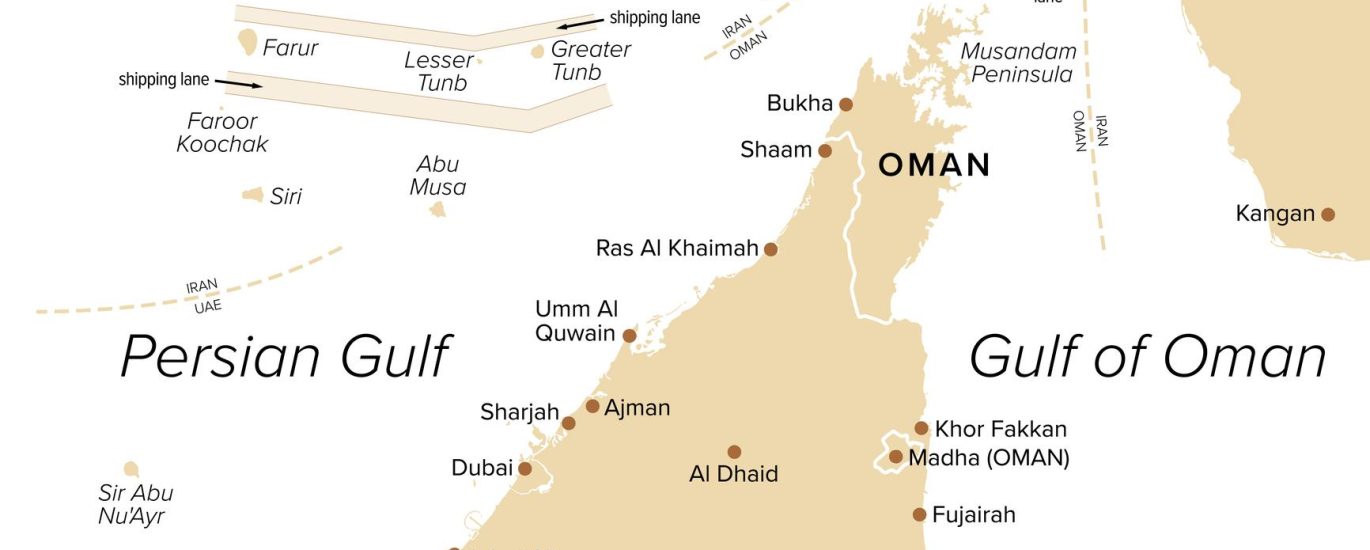
The Middle East Strait of Hormuz stands as one of the most strategically significant waterways on the planet. Nestled between Oman and Iran, this narrow passage connects the Persian Gulf with the Gulf of Oman and the Arabian Sea, serving as the sole maritime route for some of the world’s largest oil and gas exporters. Understanding the Strait of Hormuz is essential for anyone following global energy markets, Middle East geopolitics, or international security.

What Is the Strait of Hormuz?
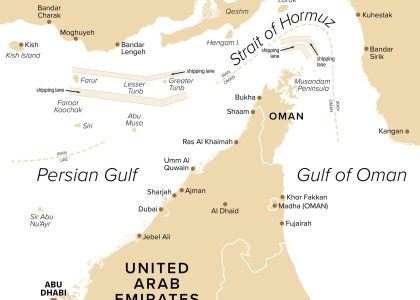
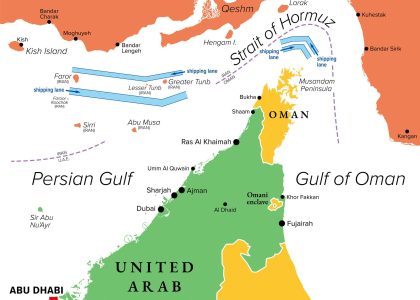
The Strait of Hormuz is a narrow waterway forming the only sea passage from the Persian Gulf to the open ocean. At its narrowest point, the strait is just 33 kilometers wide, with shipping lanes only 3 kilometers wide in each direction. This geographic bottleneck makes it one of the world’s most important maritime chokepoints.
The strait separates Iran to the north from the United Arab Emirates and the Musandam Peninsula of Oman to the south. Its name derives from the ancient port city of Hormuz, once a powerful trading center on the Iranian coast.
Why the Strait of Hormuz Matters
Global Energy Flows
The Strait of Hormuz’s importance to global energy security cannot be overstated. Approximately one-fifth of the world’s total oil consumption passes through these narrow waters daily. Under normal conditions, the strait carries around 15 million barrels of crude oil and an additional 3 million barrels of refined petroleum products every day.
Countries that rely on the strait for their exports include:
- Saudi Arabia: The world’s largest oil exporter sends the vast majority of its crude through the strait
- Iran: Virtually all of Iran’s oil exports must transit these waters
- Iraq: The country’s southern oil terminals load tankers destined for the strait
- Kuwait: Nearly all Kuwaiti crude exports pass through the waterway
- United Arab Emirates: Significant volumes of UAE oil and refined products transit the strait
- Qatar: The world’s leading LNG exporter sends its liquefied natural gas through the strait
Natural Gas Exports
Beyond oil, the Strait of Hormuz is critical for global natural gas supplies. Qatar, the world’s largest liquefied natural gas exporter, sends virtually all of its LNG through these waters. This gas supplies customers across Asia, including Japan, South Korea, China, and India, as well as some European markets.
Geography and Navigation
The strait’s geography presents significant navigational challenges. The waterway contains several islands, including Qeshm, Hormuz, and Hengam, all under Iranian sovereignty. The shipping lanes are narrow and constrained, requiring careful navigation by large vessels.
Deepwater channels run close to the Iranian coast, while shallower waters approach Omani territory. This geography means that ships passing through the strait operate within close proximity to Iranian territorial waters, a factor that has significant strategic implications.
Approximately 100 to 135 vessels pass through the strait daily under normal conditions, including oil tankers, LNG carriers, container ships, and bulk carriers. This constant traffic requires sophisticated traffic separation schemes to prevent collisions and groundings.
Historical Strategic Importance
The Tanker War Era
The Strait of Hormuz first emerged as a major geopolitical flashpoint during the Iran-Iraq War of the 1980s. In what became known as the Tanker War, both sides attacked oil tankers and commercial shipping in an effort to disrupt each other’s economies and draw international pressure onto their opponent.
Iran’s use of naval mines during this period proved particularly effective and dangerous. Mines damaged several vessels, including the supertanker SS Bridgeton, which struck an Iranian mine while under U.S. Navy escort. The mining of the USS Samuel B. Roberts in 1988 triggered Operation Praying Mantis, the largest U.S. naval surface engagement since World War II.
The downing of Iran Air Flight 655 by the USS Vincennes in July 1988, which killed all 290 passengers and crew, remains a deep wound in Iranian memory and a stark reminder of how quickly tensions in the strait can spiral.
Post-War Flashpoints
Since the Iran-Iraq War, the Strait of Hormuz has witnessed numerous confrontations:
- 2007: Iran’s Revolutionary Guards seize 15 British naval personnel at gunpoint near the strait
- 2012: Iran threatens to block the strait in retaliation for U.S. and European sanctions
- 2019: Four vessels, including two Saudi tankers, are attacked off Fujairah just outside the strait
- 2021: An Israeli-managed tanker is attacked off Oman’s coast
- 2023-2024: Iran seizes multiple vessels near or in the strait
- 2025: Two tankers collide and catch fire near the strait amid reports of electronic interference
The Current Crisis: 2026
As of March 2026, the Strait of Hormuz stands at the center of a major military confrontation between Iran and a U.S.-led coalition supporting Israel. Following U.S. and Israeli strikes on Iranian nuclear and military facilities, Iran has effectively closed the strait to most commercial shipping while maintaining selective passage for friendly nations.
The Selective Closure System
Rather than imposing a complete shutdown, Iran has implemented what analysts call “selective closure.” Under this system, vessels from nations with diplomatic channels to Tehran may transit with permission, while others are effectively blocked.
Countries that have successfully negotiated passage include:
- Pakistan: The Pakistan-flagged crude oil tanker Karachi transited around March 15
- India: Two Indian LPG carriers passed through following diplomatic talks
- Turkey: A Turkish vessel received Iranian permission and successfully transited
- China: The majority of crude oil moving through the strait is destined for China, Iran’s primary customer
Vessels granted passage often take an unusual route through Iranian territorial waters via the Larak-Qeshm Channel, suggesting coordination with Iranian authorities.
For most commercial shipping, however, the strait remains effectively closed. Approximately 1,100 ships are currently waiting in Gulf waters, including roughly 250 oil tankers, unable to transit due to security risks and insurance prohibitions.
Military Dimensions
The United States has launched Operation Epic Fury, focused on dismantling Iran’s military capabilities. Key military developments include:
- Strikes on Iran’s Kharg Island, the exit point for approximately 90% of Iran’s crude oil exports
- Bombing of hardened Iranian missile sites near the strait
- Deployment of a Marine Expeditionary Unit to the Middle East
- Reported destruction of Iran’s naval headquarters and multiple naval vessels
Iran has retaliated with missile and drone attacks on U.S. bases across the region, claimed strikes on the USS Abraham Lincoln, and attacks on oil tankers in the Gulf.
Economic Impact
Oil Markets
The conflict has sent shockwaves through global oil markets. Brent crude surged above $100 per barrel in mid-March 2026, a more than 40% increase since the war began. The reduction in oil flows is estimated at approximately 16 million barrels per day from the Persian Gulf region.
LNG Disruption
Qatar’s LNG exports have been severely disrupted, with QatarEnergy suspending production at two facilities. Analysts warn that a prolonged closure could result in a net loss of approximately 86 billion cubic meters of LNG—15% of global supply. European benchmark gas prices have surged from approximately €32 per megawatt-hour before the crisis to over €50, while Asian LNG spot prices have climbed even more steeply.
Shipping and Trade
Shipping costs have skyrocketed. Transporting a container from Asia to Europe, which cost around $2,500 before the conflict, now costs as much as $4,000—a 60% increase in just three weeks. Shipping companies have imposed emergency fuel surcharges, and insurance premiums have risen dramatically.
Alternatives and Bypass Routes
The current crisis has highlighted the importance of alternative export infrastructure:
Saudi Arabia’s East-West Pipeline
Saudi Arabia’s 1,200-kilometer pipeline running from its eastern fields to the Red Sea port of Yanbu can transport up to 5 million barrels per day, bypassing the strait entirely.
UAE’s Habshan-Fujairah Pipeline
The UAE pipeline connects its inland fields to the Gulf of Oman port of Fujairah, with capacity exceeding 1.5 million barrels per day.
Iran’s Jask Terminal
Iran has revived operations at the Jask oil terminal on the Gulf of Oman, its only export facility completely outside the Strait of Hormuz. However, analysts note the facility handles very large crude carriers inefficiently.
Environmental Concerns
The Strait of Hormuz sits in an ecologically sensitive region. A major oil spill in these confined waters would have devastating consequences for marine life, coastal communities, and desalination plants that provide drinking water for millions of people across the Gulf states.
The current conflict raises the risk of such a disaster. Struck tankers, damaged oil infrastructure, and sunken vessels all threaten to release oil into the water. The narrow, confined nature of the strait would amplify the impact of any spill.
International Response
The international community has struggled to respond cohesively to the crisis. The United States is attempting to organize a multinational coalition to escort vessels through the strait, but many allies have been reluctant to commit given the obvious risks.
Germany’s Defense Minister articulated the dilemma, questioning what European escort ships could achieve that the U.S. Navy itself cannot. France has stated there is no question of sending vessels to the strait at this point. Japan has no plans to send maritime self-defense forces.
The United Kingdom says it is working with allies on a viable plan to reopen the strait, but no concrete action has yet emerged.
Future Outlook
The Strait of Hormuz’s future remains highly uncertain. Several factors will determine how the current crisis evolves:
Iran’s Strategic Calculus
Iran faces a difficult choice. Continuing the selective closure allows it to pressure adversaries while preserving its own exports, but risks escalating military responses. A complete shutdown would devastate the Iranian economy and likely trigger major retaliation.
Coalition Formation
If the United States can assemble a credible escort coalition, it may attempt to force the strait open. If not, the selective closure could persist indefinitely.
Diplomatic Off-Ramps
India and Pakistan have demonstrated that diplomatic engagement with Iran can secure passage. Whether broader negotiations could resolve the crisis remains unclear.
China’s Role
China’s unique position as Iran’s primary customer and diplomatic partner gives it significant influence. Beijing has thus far maintained its oil purchases while avoiding direct involvement in the conflict.
Conclusion
The Middle East Strait of Hormuz stands at a crossroads. For decades, this narrow waterway has functioned as a neutral international passage, guaranteed by maritime law and naval patrols. Today, it has become a strategic weapon in a wider conflict—a tool wielded by Tehran to reward friends, pressure enemies, and demonstrate its control over the world’s most critical oil chokepoint.
Approximately one-fifth of global oil consumption passes through these waters. When the strait is threatened, the entire world feels the impact through higher energy prices, disrupted supply chains, and economic uncertainty. Understanding the Strait of Hormuz—its geography, history, and current dynamics—is essential for anyone seeking to navigate the complex intersection of energy, geopolitics, and security in the Middle East.
As the conflict continues to evolve, the strait will remain a focal point of international attention. Whether through military confrontation, diplomatic resolution, or prolonged selective closure, the fate of this narrow waterway will shape global energy markets and Middle East security for years to come.