


The phrase “Iran closes Strait of Hormuz” has become one of the most alarming headlines in global energy markets. When Tehran threatens or implements closure of this narrow waterway, oil prices surge, shipping companies reroute vessels, and governments scramble to respond. But what does Iran closing the strait actually mean in practice? This article examines the history, mechanics, and implications of Iran’s most potent strategic weapon.

What Does “Closing the Strait” Mean?
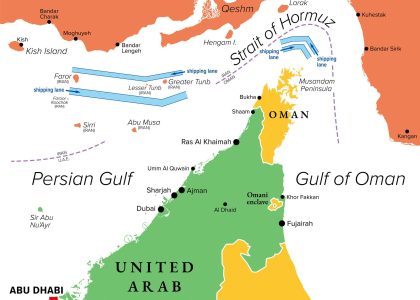
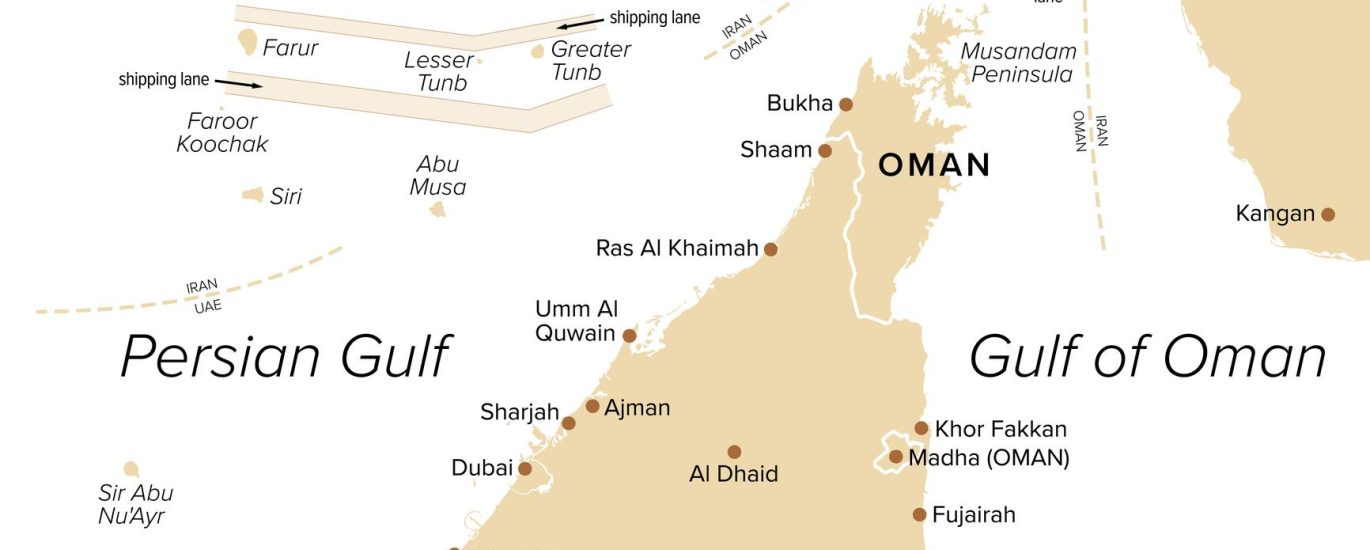
When Iran threatens to close the Strait of Hormuz, it is announcing its intention to block the passage of oil tankers and commercial vessels through the 33-kilometer-wide waterway that connects the Persian Gulf to the open ocean. In practice, closure can take several forms:
Physical Blockade: Using naval vessels, mines, or sunken ships to physically prevent passage through the strait’s narrow shipping lanes.
Harassment Campaign: Attacking or threatening vessels to make transit too dangerous for commercial shipping, effectively closing the strait through intimidation rather than physical barriers.
Selective Closure: Allowing passage only for friendly nations while blocking adversaries, as Iran has implemented during the current conflict.
Mining Operations: Seeding the strait with naval mines that make navigation life-threatening for all vessels.
Each approach carries different risks and consequences, and Iran has employed variations of all four throughout its history with the strait.
Historical Instances of Closure Threats
The Iran-Iraq War Era
The first major closure threats emerged during the Iran-Iraq War of the 1980s. In 1982, as Iran’s ground offensive stalled, Tehran warned Gulf Arab states supporting Iraq that “the Strait of Hormuz will no longer be safe for oil transport.” The threat alone sent Brent crude jumping from $34 to $39 per barrel.
In 1984, as the Tanker War intensified, Iran’s Revolutionary Guards issued another warning: “If Iraq continues striking our oil installations, we will close the Strait of Hormuz and make the world see the cost.” This threat prompted lasting structural changes in global energy infrastructure, including Saudi Arabia’s construction of the East-West Pipeline to bypass the strait.
In 1986, Iran combined threats with action, attacking Kuwaiti tankers in retaliation for Kuwait allowing Iraq to use its ports. Oil prices hit $45 per barrel, the war’s peak.
Post-War Threats
Throughout the 1990s and 2000s, Iran periodically raised the specter of closure during periods of tension. In 1996, following U.S. sanctions, Iranian officials warned of consequences if oil exports were threatened. In 2006, amid the nuclear standoff, Revolutionary Guards commanders conducted war games demonstrating their ability to close the strait.
2012 Crisis
The most significant closure threat before the current conflict came in late 2011 and early 2012. As European and American sanctions targeted Iran’s oil exports, Tehran threatened to block the strait. Vice President Mohammad Reza Rahimi warned that “not a drop of oil will pass through the Strait of Hormuz” if sanctions were imposed.
The threat succeeded in raising global alarm. Oil prices surged, the Pentagon warned it would not tolerate closure, and the European Union accelerated efforts to find alternative supplies. Ultimately, Iran did not follow through, but the episode demonstrated the strait’s value as leverage.
2018-2019 Escalation
Following the U.S. withdrawal from the nuclear deal in 2018, tensions in the strait escalated dramatically. In May 2019, four vessels including two Saudi tankers were attacked off Fujairah just outside the strait. In June, Iran shot down a U.S. drone. In July, Iranian forces seized the British-flagged tanker Stena Impero.
While Iran never formally closed the strait, the campaign of harassment effectively raised risks to the point where some shipping companies rerouted or suspended operations.
How Iran Could Close the Strait
Iran possesses multiple military capabilities that could be employed to close or disrupt the Strait of Hormuz.
Naval Mines
Mines represent Iran’s most potent closure tool. With over 5,000 naval mines in its inventory, including sophisticated contact, magnetic, acoustic, and smart mines, Iran could rapidly seed the strait’s narrow shipping lanes. Mines are cheap, difficult to detect, and create psychological effects disproportionate to their physical damage.
During the Tanker War, Iran’s mining campaign damaged multiple vessels and nearly sank the USS Samuel B. Roberts. Today’s mines are more sophisticated and could be deployed covertly by small boats or commercial vessels.
Anti-Ship Missiles
Iran possesses the most diverse anti-ship missile arsenal in the Middle East. Systems are positioned along the coast and on strategic islands, covering the strait’s entire width. Some analysts believe Iran has developed supersonic and ballistic anti-ship missiles capable of penetrating modern defenses.
A sustained missile campaign against commercial shipping could make transit too dangerous for insurers and shipping companies, effectively closing the strait without a physical blockade.
Fast Attack Craft
The IRGC Navy operates hundreds of small fast attack craft armed with machine guns, rockets, and anti-ship missiles. These vessels could execute swarm tactics, overwhelming larger ships through numbers. While vulnerable to air power, their small size and speed make them difficult to eliminate entirely.
Submarines
Iran’s submarine fleet, including Russian-built Kilo-class vessels and domestically produced midget submarines, could conduct mine-laying operations and attacks on shipping. Submarines add complexity to any effort to secure the strait.
Anti-Ship Ballistic Missiles
Iran has invested heavily in anti-ship ballistic missiles, a capability few nations possess. These weapons could target vessels at long range with limited warning, complicating defense efforts.
Suicide Drones
Iran’s fleet of Shahed kamikaze drones and maritime drones—unmanned explosive boats—pose new threats. These systems can be launched in swarms, overwhelming defenses through mass and low cost.
The 2026 Closure: Selective Implementation
The current conflict has produced the most significant closure in the strait’s history, though not in the form many anticipated. Following U.S. and Israeli strikes on Iranian nuclear and military facilities, Iran has implemented what analysts call selective closure.
What Selective Closure Looks Like
Under this system, Iran does not physically block the strait with mines or naval vessels. Instead, it has established what maritime intelligence firm Windward describes as “permission-based transit and control.” Vessels may pass only if their home countries have diplomatic channels to Tehran and receive clearance.
Since March 1, approximately 1.2 million barrels per day of Iranian oil have continued flowing through the strait, primarily to China. Indian and Pakistani vessels have transited following diplomatic talks. Turkish vessels have received permission.
Meanwhile, tankers carrying Saudi, UAE, and Kuwaiti oil have largely stopped moving. Approximately 1,100 ships wait in Gulf waters, unable or unwilling to transit due to security risks and insurance prohibitions.
Why Selective Closure?
Iran’s choice of selective rather than total closure reflects careful strategic calculation:
Preserving Exports: Iran continues exporting approximately 1.2 million barrels per day, maintaining its economic lifeline.
Avoiding Red Lines: Complete closure would trigger immediate and severe retaliation. Selective closure stays below that threshold.
Rewarding Friends: Granting passage to Pakistan, India, Turkey, and China rewards nations willing to engage with Tehran.
Punishing Adversaries: Blocking Saudi, UAE, and Kuwaiti oil disrupts rivals’ economies and demonstrates Iranian power.
Maintaining Ambiguity: Selective closure keeps adversaries uncertain about Iranian intentions and capabilities.
International Response to Closure
Military Options
The United States has historically responded to closure threats with military demonstrations and, when necessary, force. Operation Earnest Will in 1987-1988 escorted reflagged Kuwaiti tankers through the strait. Operation Praying Mantis in 1988 destroyed Iranian naval assets following the mining of the USS Samuel B. Roberts.
Today, the U.S. is attempting to organize a multinational coalition to escort vessels through the strait. However, many allies have been reluctant to commit. Germany’s defense minister questioned what European ships could achieve “that the mighty U.S. Navy itself cannot.” France has ruled out sending vessels. Japan has declined to participate.
Economic Responses
The international community has developed multiple mechanisms to cope with strait closures:
Strategic Petroleum Reserves: IEA member countries hold hundreds of millions of barrels of oil in strategic reserves that can be released during supply disruptions. In March 2026, members agreed to make 400 million barrels available.
Alternative Routes: Saudi Arabia’s East-West Pipeline can carry up to 5 million barrels per day to the Red Sea. The UAE’s Habshan-Fujairah Pipeline bypasses the strait entirely. These infrastructure investments, prompted by earlier threats, now provide critical alternatives.
Diversified Suppliers: Many importing countries have diversified their energy sources over decades, reducing dependence on any single route or supplier.
Coordinated Releases: Major economies can coordinate strategic reserve releases to stabilize markets, as occurred following the current crisis.
Diplomatic Engagement
India and Pakistan have demonstrated that diplomatic engagement with Iran can secure passage. Their successful negotiations suggest potential pathways for broader resolution, though the Trump administration has thus far shown little interest in direct talks.
Impact on Global Markets
Oil Prices
Closure threats and actions consistently move oil markets. The 2012 threats pushed Brent crude toward $120 per barrel. The current crisis has seen prices surge above $100, a more than 40% increase since late February.
The actual impact depends on duration and severity. Analysts warn that a prolonged closure could create a supply-demand deficit of approximately 9-11 million barrels per day—roughly 10% of global balance.
LNG Markets
The strait’s closure has severely disrupted Qatar’s LNG exports, which account for approximately 20% of global supply. European gas prices have surged from €32 per megawatt-hour to over €50, while Asian spot prices have climbed even more steeply.
Analysts warn that a prolonged Qatari disruption “will present a bigger impact than the Ukraine war, directly affecting Asia, and be compounded by oil—a gas substitute—being disrupted at the same time.”
Shipping Costs
Transportation costs have skyrocketed. Shipping a container from Asia to Europe now costs as much as $4,000, up from $2,500 before the conflict. Shipping companies have imposed emergency fuel surcharges, and insurance premiums have risen dramatically.
Regional Economic Impact
Gulf Arab states have seen their oil exports collapse. Saudi Arabia, the UAE, and Kuwait—which together normally export approximately 14 million barrels per day through the strait—have seen flows reduced to a trickle. Some Asian refiners are cutting run rates by 10% to cope with shortages.
Legal Dimensions of Closure
Iran’s actions in the strait raise complex questions under international law. The United Nations Convention on the Law of the Sea establishes a transit passage regime guaranteeing ships and aircraft the right of continuous and expeditious passage through straits used for international navigation.
Iran has signed but not ratified UNCLOS, though many provisions are considered customary international law. Tehran asserts its right to regulate passage for security and environmental reasons, a position that conflicts with the transit passage regime.
The selective closure system currently in place would almost certainly violate international law, as it discriminates among vessels based on nationality and political considerations. However, enforcing legal norms in a war zone presents obvious difficulties.
The Paradox of Iranian Self-Interest
Perhaps the most important factor shaping Iran’s closure decisions is its own dependence on the strait. Approximately 90 percent of Iranian oil exports must pass through these waters. A complete, sustained closure would devastate the Iranian economy, cutting off the revenue that sustains the state.
This vulnerability creates a paradox. Iran can threaten closure credibly because the world believes it might act irrationally. But Iranian decision-makers understand that actually following through on a complete closure would be self-destructive.
As one analyst observed, Iran’s strategy depends on the credibility of the threat, not its execution. A closed strait triggers a major crisis with unpredictable consequences. A threatened strait keeps pressure on the international community while preserving Iranian exports.
Future Scenarios
Prolonged Selective Closure
If the current conflict stabilizes, Iran may maintain selective closure indefinitely. This would allow Tehran to pressure adversaries while preserving its own exports. International pressure to reopen the strait would mount, but without a credible military option, it might prove ineffective.
Escalation to Full Closure
Iran could escalate to full closure if it perceives existential threats or seeks maximum leverage. This would trigger a major military response, likely including U.S. operations to reopen the strait. The economic consequences would be severe.
Military Reopening
If the United States assembles a credible coalition, it may attempt to force the strait open through military operations. This would involve minesweeping, escort operations, and potentially strikes on Iranian coastal defenses. The risks would be substantial.
Diplomatic Resolution
Diplomatic engagement could produce a negotiated reopening. India and Pakistan have demonstrated that talks with Iran can secure passage. Broader negotiations might address not only strait access but also nuclear issues and regional security.
Conclusion
Iran closing the Strait of Hormuz represents one of the most consequential actions any nation could take in global energy markets. The narrow waterway carries approximately one-fifth of the world’s oil, and its closure would send shockwaves through economies worldwide.
Yet Iran’s closure actions must be understood within the context of its own vulnerability. Tehran depends on the strait for its own exports, creating a fundamental constraint on its behavior. Complete closure would be self-destructive. Selective closure, harassment, and threats—these tools allow Iran to exert pressure while preserving its economic lifeline.
The current crisis has produced the most significant closure in the strait’s history, though not the total blockade many feared. Iran’s selective closure system demonstrates sophisticated strategic thinking: block adversaries, reward friends, preserve exports, and avoid red lines all simultaneously.
Whether this approach proves sustainable or escalates toward full confrontation will shape not only the strait’s future but global energy security for years to come. For now, “Iran closes Strait of Hormuz” remains a partial reality—enough to disrupt markets and pressure rivals, but not enough to trigger the devastating retaliation that complete closure would invite.